
 polski


Craig Franklin:
There are not many governors in Louisiana history who would drive to a small, rural town on a Monday afternoon just to sit in a room with smalltown mayors and sheriffs and listen. Most of them showed up at ribbon cuttings in Baton Rouge or photo opportunities in New Orleans. Rural Louisiana, as a rule, was an afterthought.
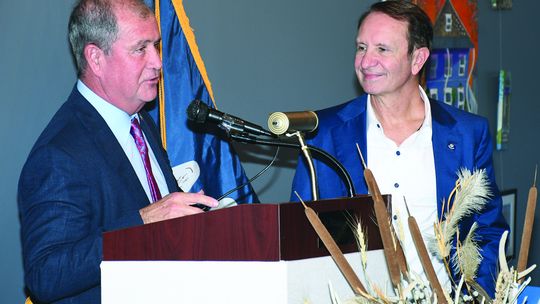
That changed Oct. 12 when Gov. Jeff Landry walked into The Schepis Museum on Main Street in Columbia and told a room full of rural leaders, “I’m not going to let them come here and let them break our natural resources.”
He came because Rep. Neil Riser asked him to. And Landry said yes.
That matters more than most people realize. The divide between rural and urban Louisiana is not a talking point. It is a measurable reality that shapes daily life in every small parish across this state. According to the U.S. Census Bureau, rural Americans are significantly more likely to live in poverty, less likely to have access to high-speed internet, and far less likely to have a hospital within reasonable driving distance. In Louisiana specifically, rural parishes lag behind urban ones in per-capita income, educational attainment, and infrastructure investment by wide margins. The broadband gap alone has cost rural Louisiana businesses and families billions in economic opportunity over the past two decades.
When a mayor in that Columbia meeting raised the issue of sewer lines that are older than most of the people sitting in the room, he was not complaining about an inconvenience. He was describing a public health crisis hiding in plain sight. When another raised the issue of affordable housing, she was talking about young families who leave because there is nowhere decent to live. When the sheriffs talked about radio equipment, they were talking about officers who risk their lives with tools that are older and less reliable than what you carry in your pocket.
Landry acknowledged all of it. He did not dodge the hard questions or redirect to a safer topic. He said rural broadband is coming. He said water and sewer are the next major challenge. He said the Louisiana Housing Corp. is being redirected so the big cities stop absorbing money that was meant for everyone. He said small agencies can now buy Motorola radios at state contract prices, cutting the cost nearly in half.
None of that happens without a relationship. The fact that Riser could pick up the phone, ask the governor to come to Columbia, and get a yes is not a small thing. Neither is the fact that Sen. Glen Womack was in that room and repeated was recognized by the governor on a first name basis. When local leaders talked about having “comfort and confidence” in their state representation, they were describing something that rural Louisiana has not always had. They were describing access. They were describing the knowledge that when the next crisis hits, somebody in Baton Rouge will take the call.
Now, I want to be honest here. I do not agree with every decision this governor has made. I have my concerns, as most people do, and I would not pretend otherwise. That is not what this is about.
What this is about is the condition of Louisiana compared to where it was. Landry inherited a state that had finished too many budget cycles in the red, with infrastructure deferred, rural communities left behind, and a general sense that the whole place was managed for the benefit of a few corridors of power. He can fairly point to four straight years of budget surplus. He can fairly point to $3.5 billion committed to rural broadband, health care access, and roads and bridges. He can fairly say that things are moving.

No state turns around overnight. No governor fixes in two years what took decades to break. But when a governor shows up in Columbia, sits down with the people who run small towns, listens to what they need, and says plainly, “We’re going to try and make sure that rural Louisiana gets their fair share, that’s why I’m here,” that is not nothing.
For too long, rural Louisiana answered the door and found nobody there. Last Monday, the governor knocked.

Comment
Comments